

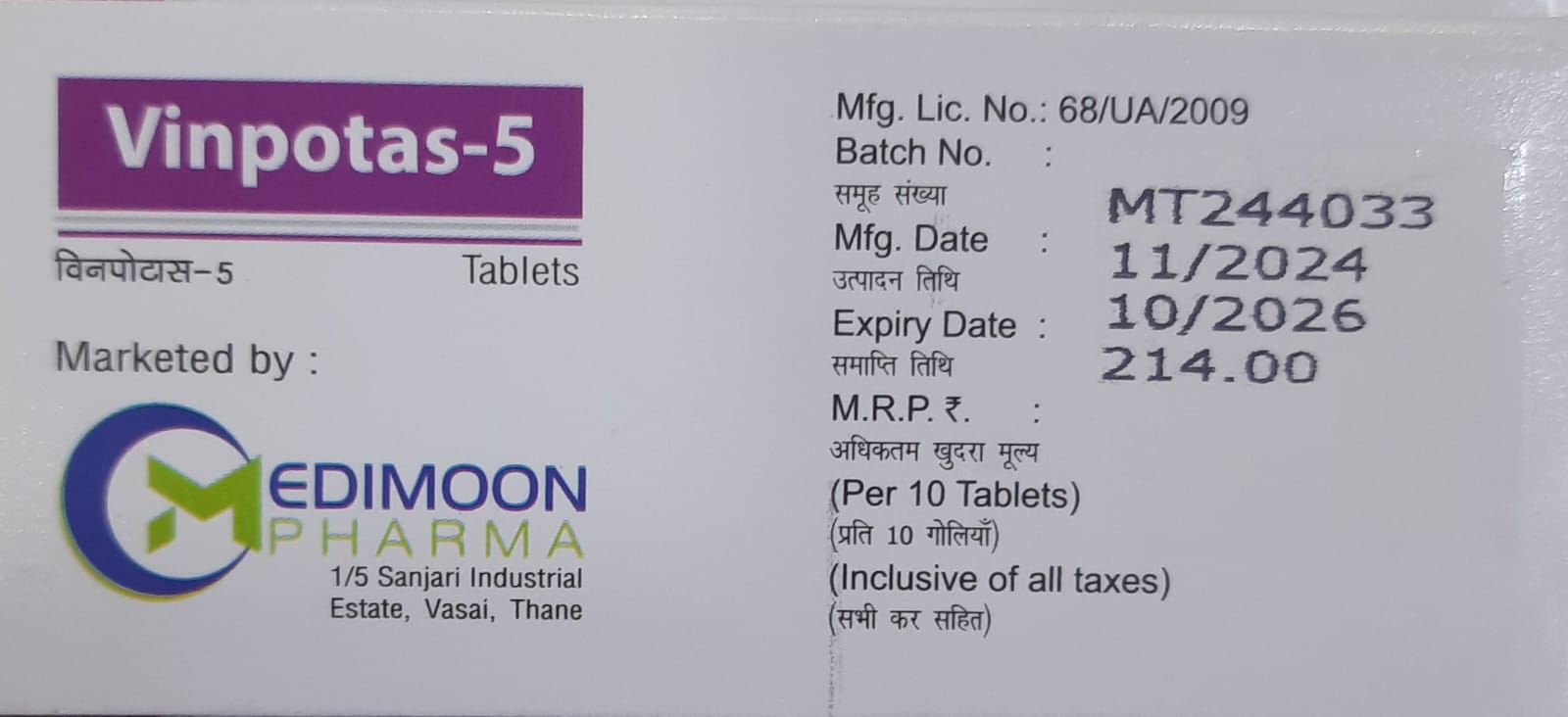
Usage of Vinpotas 5
Vinpotas 5 is indicated for:
-
Chronic cerebral ischemia
-
Post-stroke cognitive and functional recovery
-
Mild to moderate vascular cognitive impairment
-
Age-related memory decline
-
Tinnitus and vertigo of cerebrovascular origin
-
Adjunct in dementia, including vascular and mixed-type
Mechanism of Action
-
Cerebral Vasodilation: Selectively enhances cerebral blood flow without systemic hypotension
-
Neuroprotection: Inhibits voltage-sensitive Na⁺ channels, reducing neuronal damage
-
Improves Metabolism: Increases uptake of glucose and oxygen by neurons
-
Antioxidant: Reduces oxidative stress and protects neurons
-
PDE-1 Inhibition: Enhances cGMP leading to vasodilation and neuroplasticity
Common Side Effects
-
Mild headache
-
Dizziness
-
Nausea
-
Dry mouth
-
Rarely: palpitations or transient hypotension
Precautions
-
Not recommended in pregnancy or lactation
-
Use cautiously in patients with cardiac arrhythmias or low blood pressure
-
Avoid in patients with bleeding disorders
-
Monitor in elderly with multiple comorbidities
Drug Interactions
-
Anticoagulants / Antiplatelets: May increase bleeding risk
-
Antihypertensives: May have additive hypotensive effect
-
No significant CYP450-mediated interactions reported
Dosage & Administration
-
Usual Adult Dose: 5 mg to 10 mg, 2–3 times daily, after meals
-
Duration: Minimum 4–8 weeks; longer courses in chronic cases
-
Do not crush or chew; swallow whole with water
Storage
-
Store below 25°C in a cool, dry place
-
Protect from light and moisture
-
Keep out of reach of children
Patient Counseling Tips
-
Take after meals to avoid stomach upset
-
Do not discontinue suddenly in chronic neurological conditions
-
Report dizziness, palpitations, or unusual symptoms
-
Not intended for use in children or pregnant women
Highlights for Field Force
✅ Selective cerebral vasodilator—no significant impact on systemic BP
✅ Dual action: Improves blood flow + neuroprotection
✅ Useful in elderly, post-stroke, and cognitive decline patients
✅ Enhances mental alertness and memory in vascular origin deficits