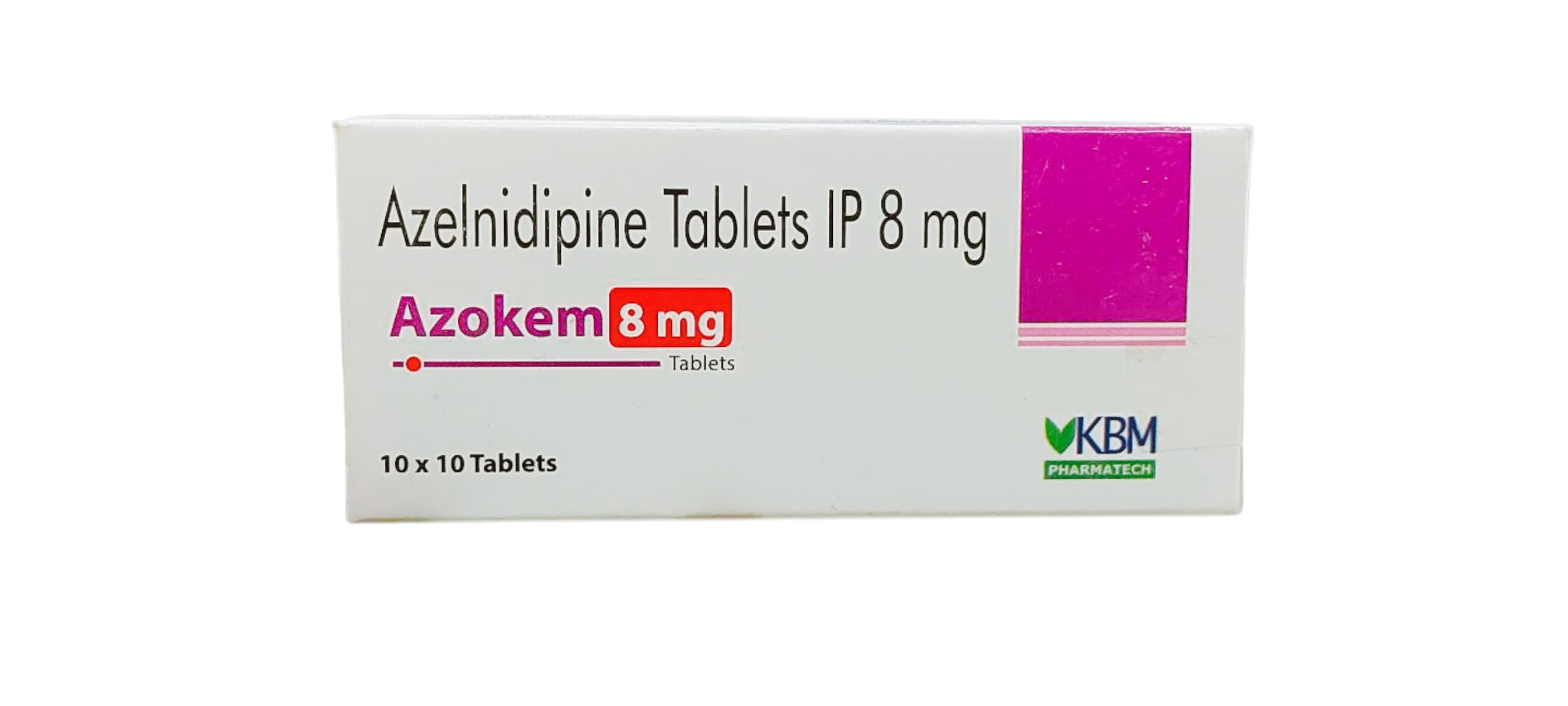
Usage of Azokem 8
Azokem 8 is indicated for:
-
Essential hypertension (mild to moderate)
-
Isolated systolic hypertension
-
Hypertensive patients with coexisting tachycardia
-
May also be used in cases of left ventricular hypertrophy (LVH) or elderly hypertension
Mechanism of Action
-
Blocks L-type calcium channels in vascular smooth muscle
-
Causes vasodilation → reduces systemic vascular resistance
-
Does not stimulate the sympathetic nervous system, hence minimal reflex tachycardia
-
Also exhibits antioxidant properties and reduces sympathetic tone
Key Benefits
✅ 24-hour BP control with once-daily dosing
✅ Minimal pedal edema vs. amlodipine
✅ No reflex tachycardia
✅ Organ-protective (kidney, heart)
✅ Safe in elderly hypertensives
Common Side Effects
-
Mild headache or dizziness
-
Flushing (rare)
-
Palpitations (very rare)
-
Fatigue
-
Edema (significantly lower incidence compared to amlodipine)
Precautions
-
Not recommended in pregnancy or lactation
-
Use with caution in hepatic impairment
-
Avoid abrupt discontinuation
-
Monitor BP regularly, especially in elderly or dehydrated patients
Drug Interactions
-
Enhanced effect when used with other antihypertensives
-
Use cautiously with beta-blockers or diuretics
-
Grapefruit juice may increase azelnidipine levels (avoid concurrent intake)
-
Minimal interaction with CYP enzymes
Dosage and Administration
-
Usual dose: 8 mg once daily
-
Dose may be adjusted (4 mg to 16 mg) based on patient response
-
Take after breakfast; avoid high-fat meals to prevent enhanced absorption
-
Onset of action: slow (1–2 hours); ideal for smooth BP control
Storage
-
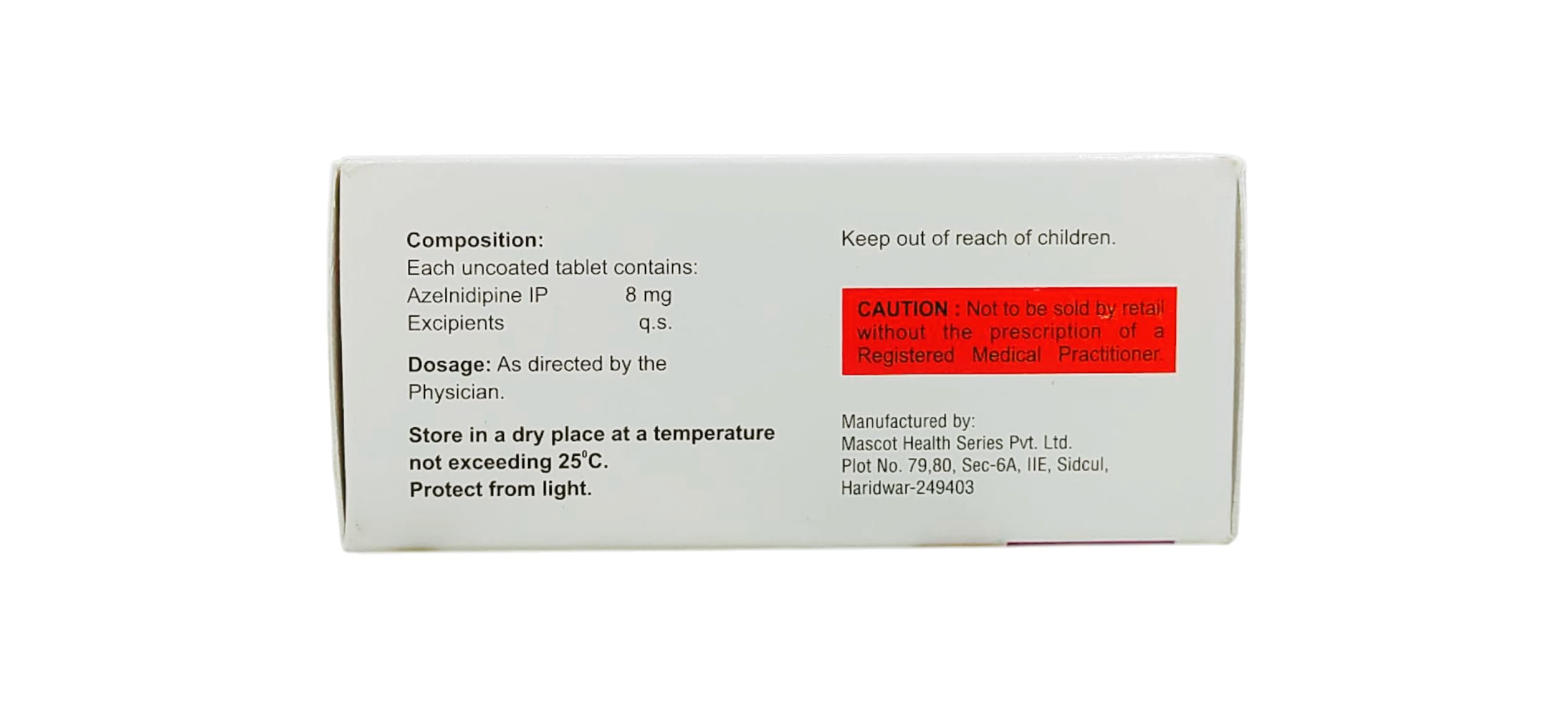
Store below 30°C
-
Protect from light and moisture
-
Keep out of reach of children
Patient Counseling Points
-
Take the medicine at same time daily, preferably in the morning
-
Avoid sudden posture changes to prevent dizziness
-
Do not consume grapefruit juice during therapy
-
Report persistent swelling of ankles or unusual fatigue
-
Follow prescribed diet and lifestyle measures for hypertension