

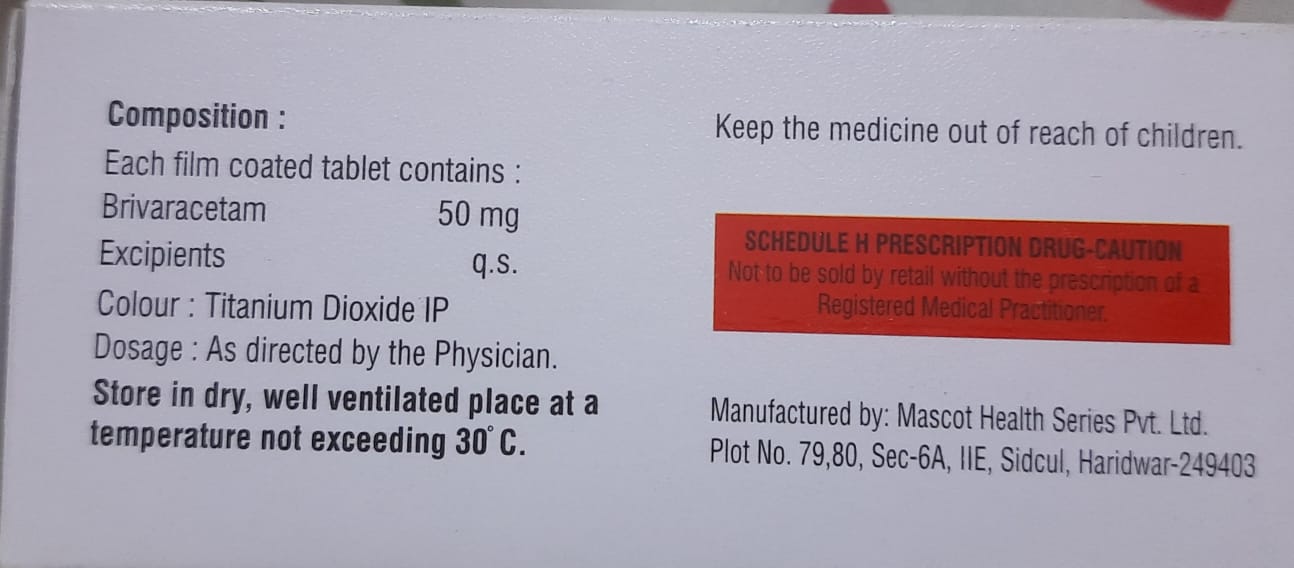
Usage of Briokem 50
Briokem 50 is indicated for:
-
Focal onset seizures (partial seizures) with or without secondary generalization
-
Adjunct therapy in patients with epilepsy not fully controlled on current regimen
-
Can also be used in generalized epilepsy (off-label in some settings)
Mechanism of Action
Brivaracetam selectively binds to SV2A, a synaptic vesicle protein involved in neurotransmitter release modulation, resulting in:
-
Suppression of neuronal hyperexcitability
-
Inhibition of epileptic activity spread
-
Improved seizure control with minimal sedation
Compared to levetiracetam, Brivaracetam has 20x higher affinity for SV2A and lower risk of irritability, agitation, or mood changes.
Key Benefits
✅ Rapid onset of antiepileptic action
✅ Improved behavioral and psychiatric tolerability
✅ Lower incidence of drowsiness, dizziness, and fatigue
✅ Safe as add-on therapy with most AEDs
✅ No need for titration in most patients — easy to initiate
Common Side Effects
-
Somnolence or dizziness (dose-dependent)
-
Fatigue
-
Nausea or irritability (mild and self-limiting)
-
Rare: Mood swings, aggression, suicidal thoughts (monitor closely)
Precautions
-
Use cautiously in patients with depression or psychiatric history
-
May cause drowsiness or impaired driving ability
-
Monitor behavior, especially during initial weeks of therapy
-
Avoid abrupt discontinuation to prevent withdrawal seizures
-
Dose adjustment may be required in severe hepatic impairment
Drug Interactions
-
Minimal drug interactions due to limited CYP metabolism
-
Can be safely co-administered with most AEDs (lamotrigine, valproate, carbamazepine, etc.)
-
Avoid use with alcohol or CNS depressants
-
May slightly interact with rifampicin, carbamazepine epoxide (reduce efficacy)
Dosage and Administration
-
Usual dose: 50 mg twice daily (can be increased to 100 mg BID if needed)
-
Can be taken with or without food
-
No need for slow titration in most cases
-
Do not crush or split the tablet
Storage
-
Store at room temperature below 25°C
-
Protect from moisture and direct sunlight
-
Keep out of reach of children
Patient Counseling Points
-
Take the medication at the same time each day
-
Do not stop abruptly — consult physician if side effects occur
-
Inform your doctor about any mood changes, irritability, or suicidal thoughts
-
Avoid driving or operating machinery until the effect is known
-
Regular follow-ups for seizure control and side effect monitoring are important