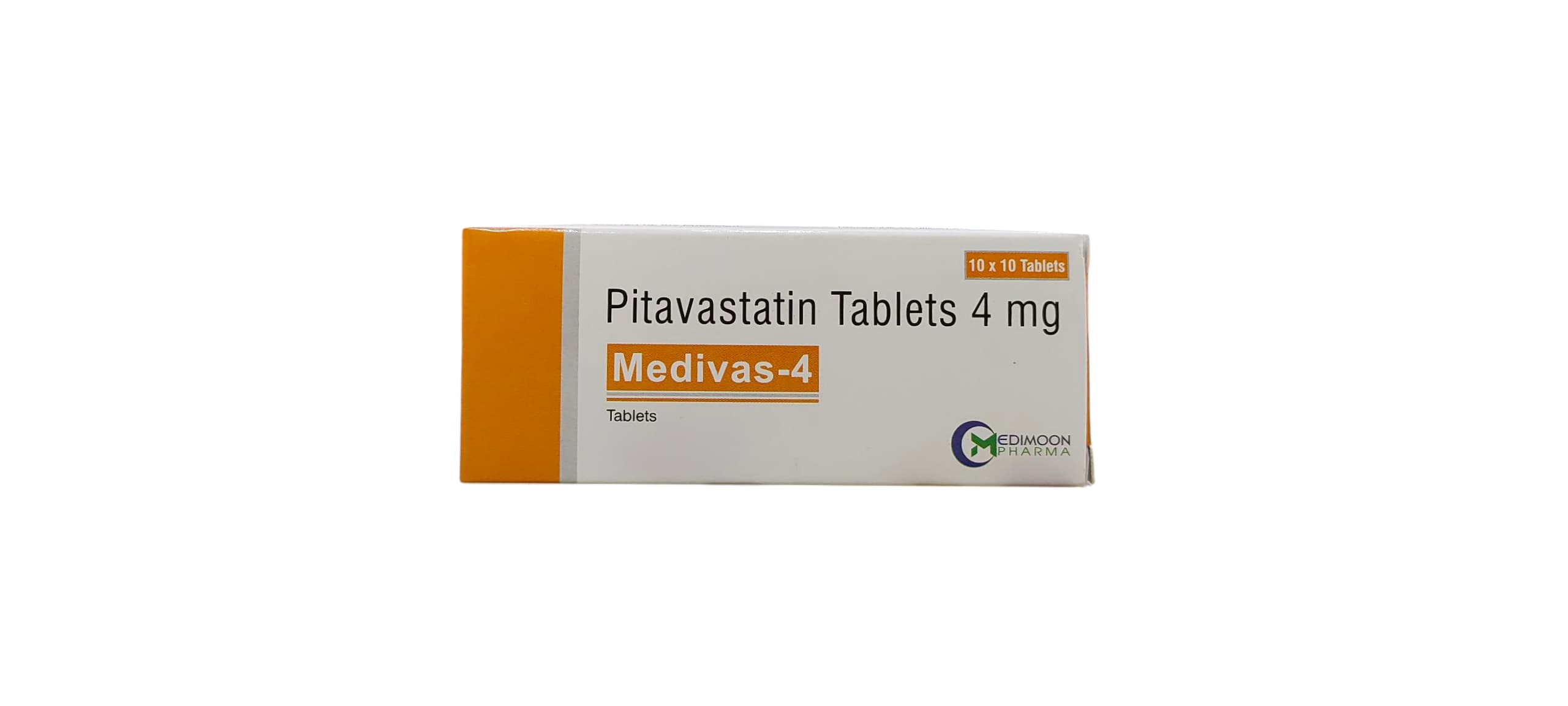
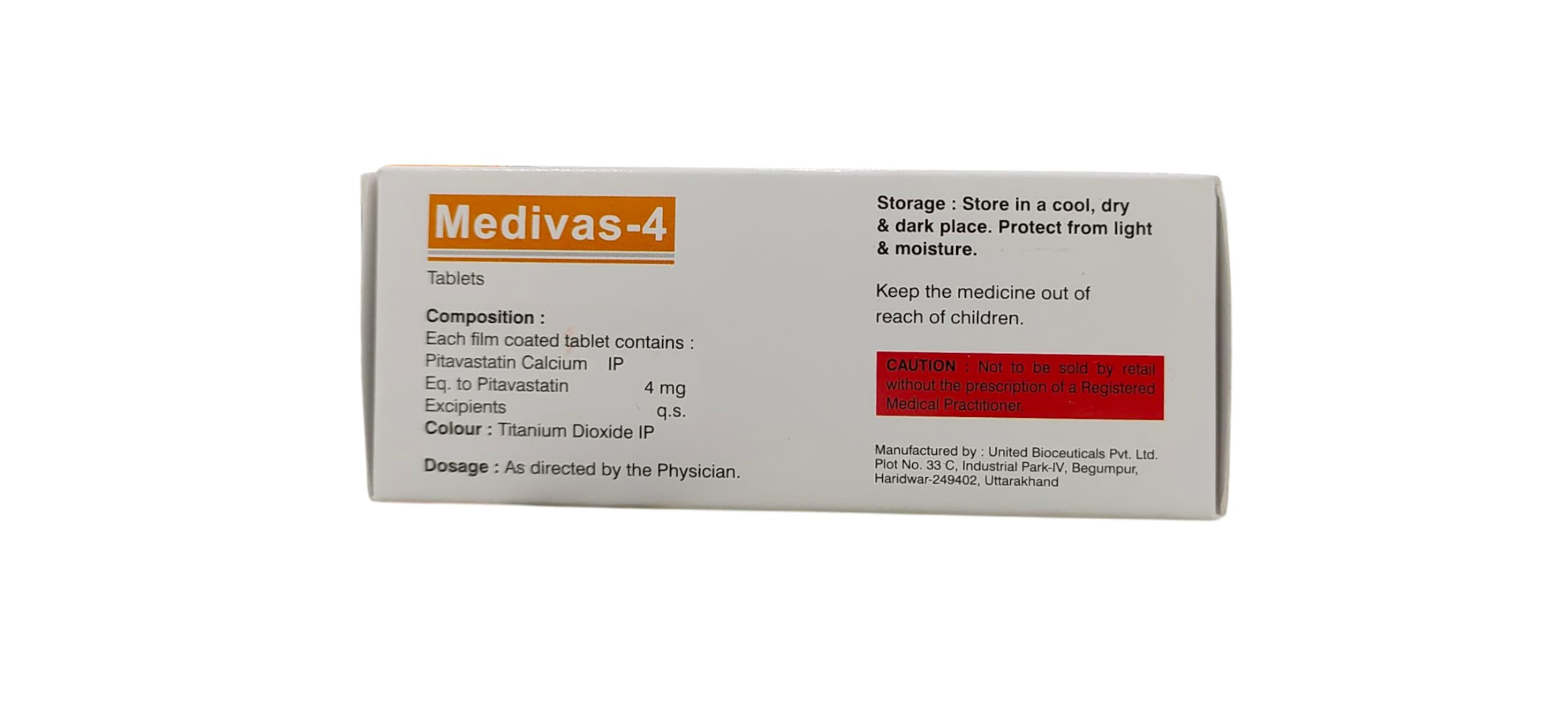
Usage of Medivas 4
-
Primary hyperlipidemia and mixed dyslipidemia
-
Familial hypercholesterolemia (heterozygous)
-
Prevention of cardiovascular events in patients with multiple risk factors
-
Suitable for statin-intolerant patients who experienced muscle-related side effects with other statins
-
Can be used in Type 2 diabetic patients for dual benefit on lipid profile and insulin sensitivity
Common Side Effects
-
Headache
-
Myalgia or muscle cramps
-
Back pain
-
Constipation
-
Joint pain
-
Mild elevation in liver enzymes
-
Rare: Rhabdomyolysis (monitor CPK levels if muscle symptoms occur)
Precautions
-
Liver dysfunction: Avoid in active liver disease; monitor LFTs at baseline and periodically
-
Renal impairment: Use with caution in moderate-to-severe renal dysfunction
-
History of muscle disorders: Monitor closely for myopathy or rhabdomyolysis
-
Avoid excess alcohol intake
-
Not recommended in pregnancy or lactation – Category X
-
Discontinue temporarily if the patient develops a serious acute condition (e.g., major surgery, trauma)
Drug Interactions
-
Fewer CYP450 interactions (not significantly metabolized by CYP3A4)
-
Caution with:
-
Fibrates (e.g., gemfibrozil) – ↑ risk of myopathy
-
Cyclosporine – May increase Pitavastatin levels
-
Warfarin – Monitor INR if co-administered
-
Niacin – ↑ risk of liver enzyme elevation and myopathy
-
-
Safe with many antihypertensives, antidiabetics, and immunosuppressants
Dosage and Administration
-
Once daily, preferably at night (though timing is flexible due to long half-life)
-
Can be taken with or without food
-
Dose adjustment may be needed based on LDL goals, renal function, and tolerance
Storage
-
Store in a cool, dry place below 25°C
-
Protect from light and moisture
Patient Counselling Tips
-
Emphasize the need for long-term adherence even when lipid levels improve
-
Inform about the signs of muscle pain or weakness — report promptly
-
Encourage lifestyle modifications like low-fat diet, regular exercise, and weight management
-
Advise to avoid grapefruit juice (though less likely to interact, still caution is preferred)
-
Do not take during pregnancy or if planning pregnancy