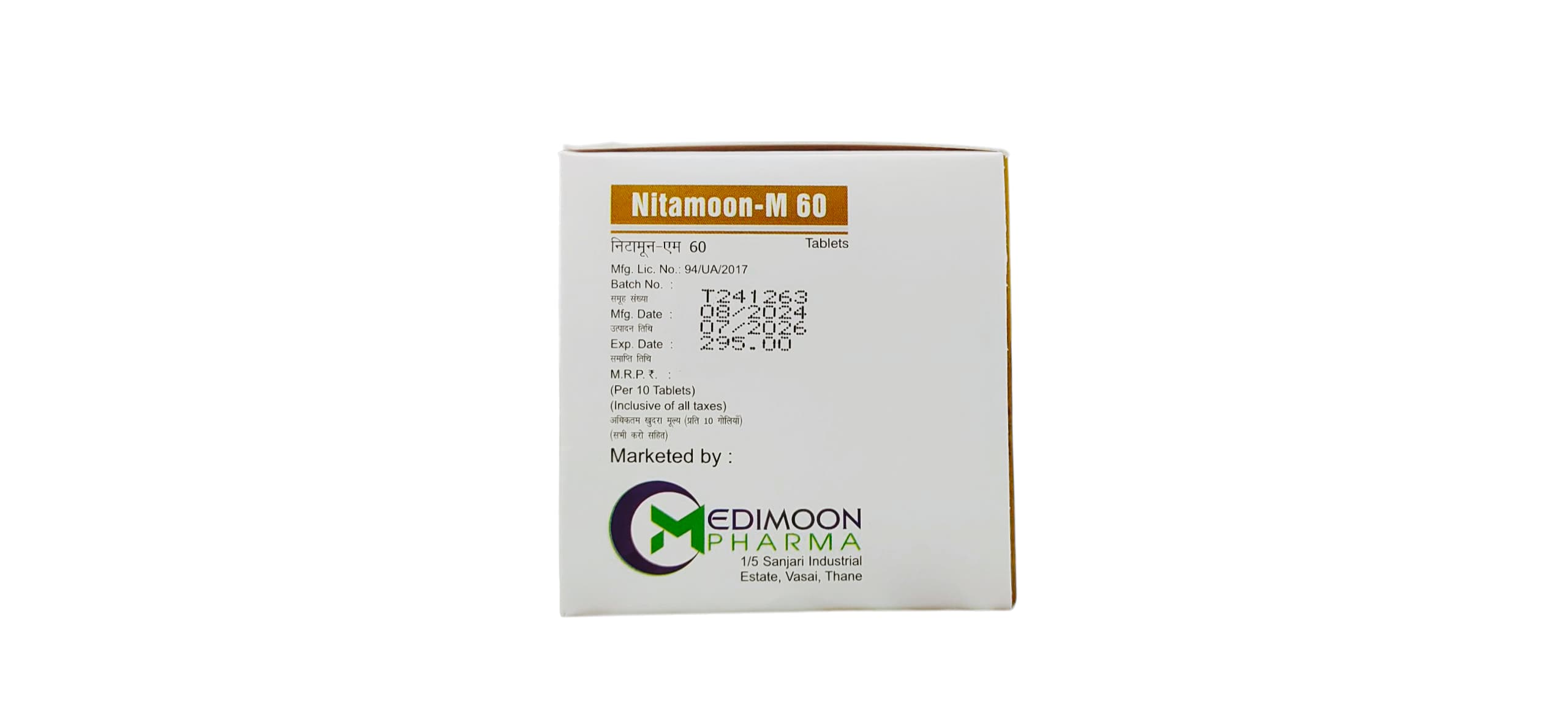
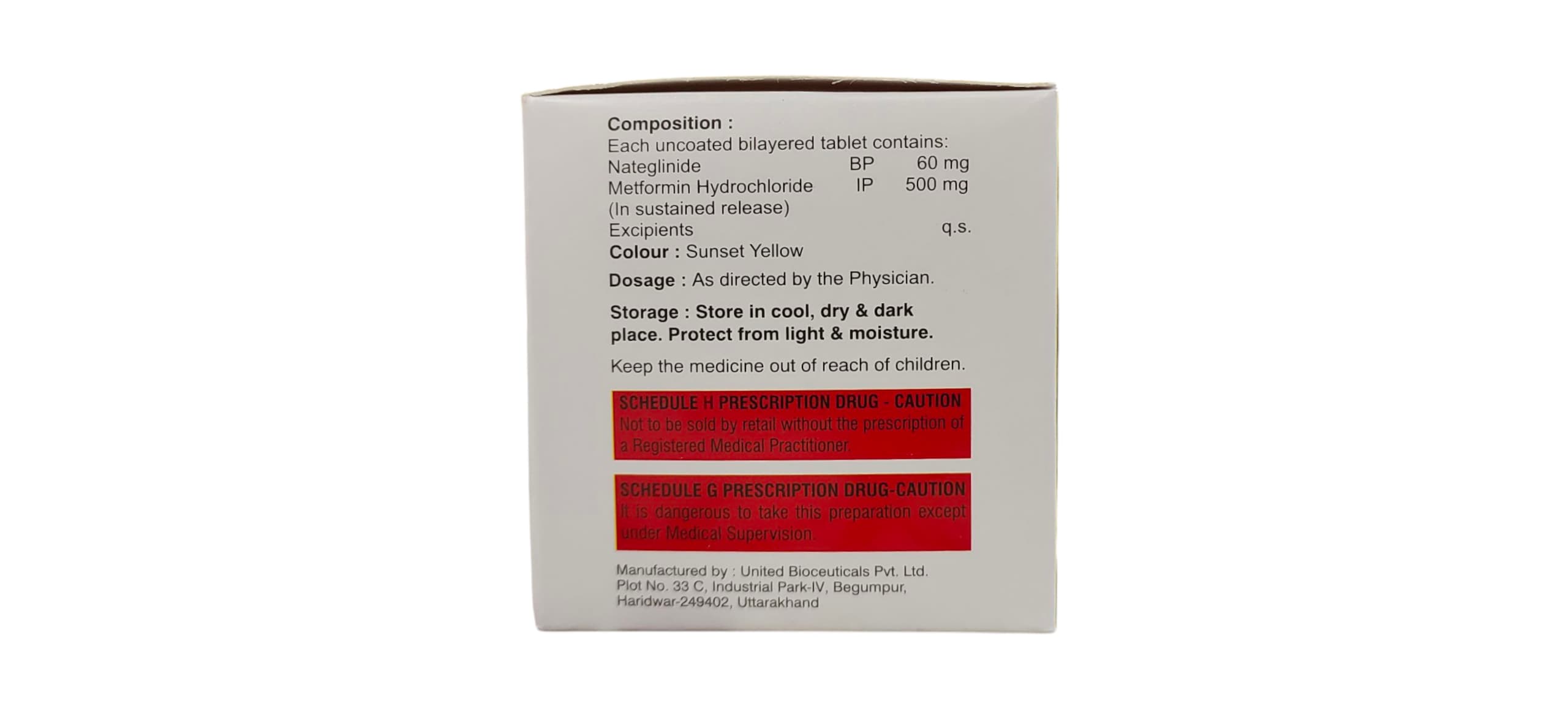
Usage of Nitamoon M60
-
Type 2 Diabetes Mellitus, especially in:
-
Early-stage T2DM uncontrolled on monotherapy
-
Patients with high postprandial glucose (PPG) and elevated fasting sugar
-
Individuals requiring a low hypoglycemia risk profile
-
Patients with irregular meal schedules
-
As a step-up from metformin monotherapy
-
Mechanism of Action
-
Nateglinide: Enhances glucose-dependent insulin secretion from β-cells, rapidly controlling mealtime glucose surges.
-
Metformin: Suppresses hepatic glucose output and enhances insulin sensitivity without causing weight gain or hypoglycemia.
Together, they offer dual-phase glycemic coverage:
➡ Metformin handles basal (fasting) glucose
➡ Nateglinide controls meal-induced (postprandial) excursions
Common Side Effects
-
Nateglinide-related: Mild hypoglycemia (less common than sulfonylureas), headache, upper respiratory symptoms
-
Metformin-related: Gastrointestinal upset, bloating, diarrhea, metallic taste
-
Rare: Lactic acidosis (extremely rare, but serious – caution in renal/hepatic dysfunction)
Precautions
-
Renal impairment: Assess renal function before initiation; avoid if eGFR <30 mL/min/1.73m²
-
Hepatic dysfunction: Use with caution due to lactic acidosis risk
-
Avoid in Type 1 diabetes or diabetic ketoacidosis
-
Caution in elderly or malnourished patients—monitor for hypoglycemia
-
Monitor vitamin B12 levels with long-term metformin use
Drug Interactions
-
Alcohol: Increases risk of lactic acidosis
-
Beta-blockers: May mask symptoms of hypoglycemia
-
Corticosteroids, diuretics: May increase blood glucose
-
CYP2C9 inhibitors/inducers: May affect Nateglinide metabolism
-
Contrast agents: Temporarily discontinue metformin before and after iodinated contrast procedures
Dosage and Administration
-
One tablet before each major meal, typically 2–3 times daily
-
Take 15–30 minutes before food
-
If a meal is skipped, skip the dose to prevent hypoglycemia
-
Dose titration based on glycemic response
Storage
-
Store below 25°C, in a cool, dry place
-
Protect from light and moisture
Patient Counselling Tips
-
Always take before meals—helps prevent post-meal sugar spikes
-
Do not skip meals after taking the medicine
-
Inform your doctor of any gastrointestinal symptoms, especially persistent nausea or fatigue
-
Monitor blood sugar levels regularly
-
Encourage lifestyle interventions (diet, exercise) alongside therapy
Positioning Benefits
-
Combines the fast-acting mealtime control of Nateglinide with the baseline glucose-lowering of Metformin
-
Low risk of sustained hypoglycemia
-
Suitable for young-onset diabetics and patients needing flexible meal-time management
-
May delay insulin initiation in early diabetics